5.30.2013
Developing classical and contemporary models in ESRI's City Engine- CASA Working Paper 191
ESRI's City Engine not only is a great urban generator, but it also provides the ideal approach for turning the 3D virtual city into an urban modelling tool. Procedural modelling visualizes the results of mathematical models on a 3D Environment and simulate the changes real-time, providing all the necessary features for testing the consequences of Urban modelling theories onto the physical form of the urban environment.
I am very excited to have this first paper published in the CASA UCL webpage.
Abstract:
In this paper we describe the development of projects which aim to explore the use of procedural modelling as a complete toolkit for building interactive visualizations of urban modelling theories. We will use three case studies, starting with the original von-Thunen model, a generalization of von-Thunen using multiple centres and finally the standard dynamic retail model by Wilson and Harris. We will discuss the advantages and limitations in using ESRI’s City Engine and the use of interactive techniques, to visualize and explore classical and contemporary urban modelling theories, by introducing spatial interaction and spatial dynamics within the simulation of a 3d city. In this framework, we provide a guide for developing urban models to aid better analysis and understanding of the urban environment through 3d urban visualizations, complexity theories and interactive systems.
download the full paper and other publications by CASA from here
This paper presents work conducted within the context of the MRes in Advanced Spatial Analysis and Visualization. Supervisor professor: Dr. Andrew Hudson Smith.
I will soon publish a brief tutorial.
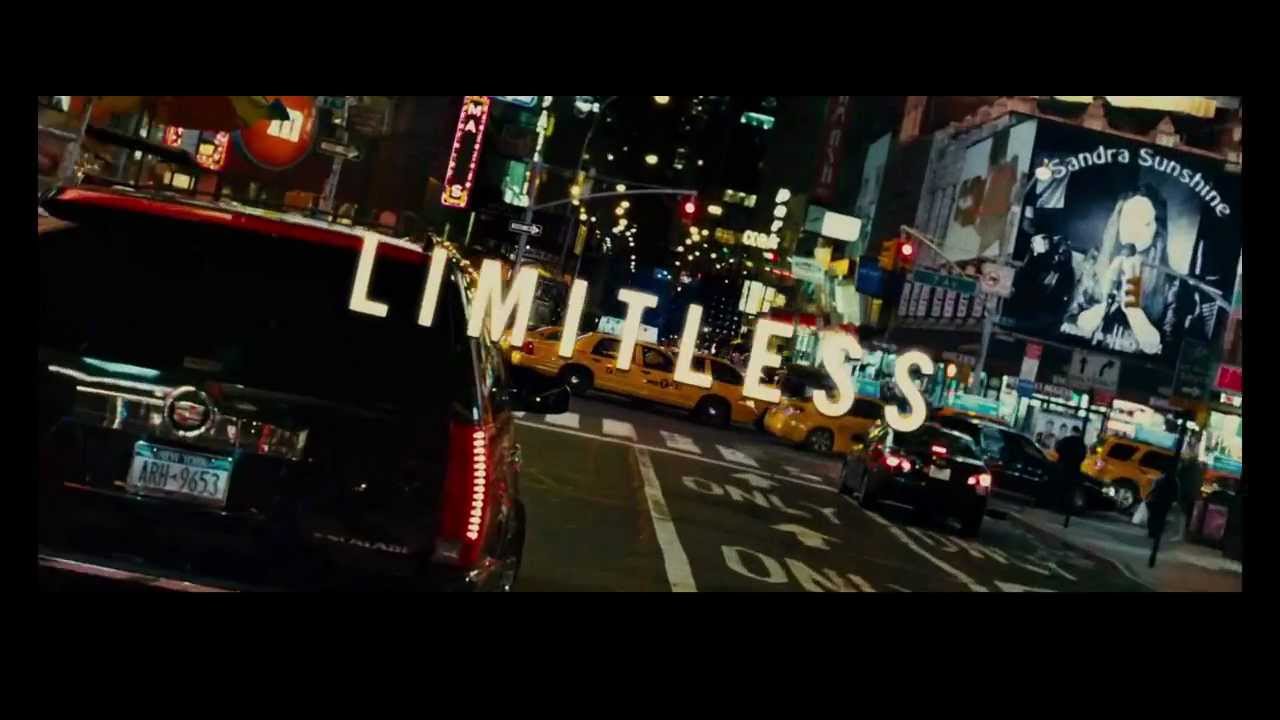
Limitless London
Defining urban boundaries is certainly an undefined topic. A proof is the recent "boarderless" competition where the winning projects swing between creating a functional built form of the boundary, or revolved around the notions of non-permanence and instability. The winning project ‘Floating Border Project’ by Hélène Grialouand Sebastien Gafari, creates a moving boarder. "The shaded frontier is moving throughout hours, days and seasons. The installation is composed of an inflatable structure which consists of a balloon cloud upon the Temple. These balloons calculate the weather forecast, wind and luminosity. During bad weather, the limit on the ground disappears and the aerial structure lights up to become a signal seen by the both two countries."
As urban planning and architecture integrates advanced techniques from computer science, big data and other sciences, it is affecting the built environment in both design and construction. New techniques which introduce complex calculations of different data feeds have led professionals of the build environment to slightly change their role and find solutions in relation to design and function with a clear focus on optimization and efficiency.
In the movie "Limitless" - 2011, a writer finds the "golden" pill, which allows him to access all of his potentials, giving him fulfilment in life- work and relationships and to accomplish his every goal. The intro of the film, is a very good metaphore of the limitless city. A reflection of todays fluxuating society and the rush to adjust to something that looks as if "it" has begun and as if "it" has no ending.
![]() |
| 1st prize of boarderless competition by Hélène Grialou & Sebastien Gafari |
In another film by K. Giannaris, "From the Edge of the City" , the undefined city boundaries represent a more vague image of the people who live in the edge of social acceptable. In today's society, to be able to learn quick and easy so as to be as efficient as possible is part of this new world and this tends to be a dominant idea of the new urban utopia. Are we giving our cities some technological shots in the end? Are the boarders going to be defined by what is unable to adjust; inhabited by the marginalized of those without smart-phones?
And so, inspired by the brilliant intro of "Limitless" - here is a google maps version for the city of London. Of course not as well executed, but an animation using Google maps and some free sounds from http://soundbible.com, turned out to be something very quick and easy to do.
5.22.2013
Untitled #1 - local Avoidance
In CASA UCL, we have been exploring diffrent assets in Unity 3D. The local avoidance asset of the A* Pathfinding Project, seems to be a complete and one of the most interesting toolkits for simulating hundrends, maybe thousands of agents real-time. Among others, it includes a complete local avoidance system based on RVO and ORCA.
There seams to be a slight glitch in the generation of diffrent graphs, but overall it can add up to about 6000 - 7000 pathfinding elements without causing any problems and the source code is open for further development. In this visualization the elements not only detect one another, but also have a basic interaction with their enviroment (In this case the space created by the 3D text). In this case there are points in the 3d text which attract more than others and create clusters which fill the space inside the graph. There are two graphs used, one which detects obstacles, such as 3d objects and one which attracts the bots to specific locations.
find the A* Project at : http://arongranberg.com/astar/features
4.30.2013
Agents and Sustainability in Unity 3D

Built in Unity 3D, this is an early attempt to create a simple model of energy consumption using agents and interactivity in a playful manner. Eve, the avatar from the infinite museum and her sisters, are looking for energy to grow. Once found, they no longer move in panic. That is until they have consumed the energy they stored..
It is not arguable that there is a relentless hunt for energy supply these days and renewable energy is one of the key topics in discussions about the future of the city. Building an intelligent sustainable urban environment is a priority and we seem to be heading towards there... however, urban areas and the demand for energy keeps growing in an accelerating ratio, and the lack of it, seems to be causing panic. On top of that, unexpected events keep coming and they seem to destroy all the effort for planning and predictions.
It is a fact though, that simulations, can help us understand the consequences of decisions and help in avoiding at least the obvious mistakes.
This is part of a PhD research and part of the research work at the Centre for Advanced Spatial Analysis in UCL.
4.15.2013
A London Network Analysis using City Engine
I thought i might try a very quick network analysis of central London using the new City Engine Graph analysis tool and the OS road network. In City Engine, Graph networks can be analyzed by computing global integration, local integration and inbetween centrality. Global integration refers to the sum of shortests paths between each road segment and all other selected segments. In short, this tool calculates all shortest paths between street segments, while the cost fuction takes into account the angles between segments. In this case i' m using automated settings, but even so, the graph tool identifies key features of London's street network such as the high values of Global integration on Oxford Street, which are highlighted red.
2.19.2013
Invisible fields
The Washington Post recently released a front-page article claiming that "The federal government wants to create super WiFi networks across the nation...Cities support the idea because the networks would lower costs for schools and businesses or help vacationers easily find tourist spots. Consumer advocates note the benefits to the poor, who often cannot afford high cellphone and Internet bills."
I will not comment on whether this is a true or false statement, however I am at the CASA office in Tottenham court road and right now i am probably within the range of more than 100 sending and receiving signals. From mobile phones, to wireless networks, to the Geiger counter which measures radiation levels and shows results real-time via CASA’s online webpage “CityDashboard”. Sensors have come to realize a new urban landscape. A new locality which is not however making a realized dialogue with the physical environment... However, there are side-effects.
Wireless in the world from Timo on Vimeo.
"This new urban landscape is no longer predicated solely on architecture and urbanism. These disciplines now embrace emerging methodologies that bend the physical with new measures, representations and maps of urban dynamics such as traffic or mobile phone flows. Representations of usage patterns and mapping the life of the city amplify our collective awareness of the urban environment as a living organism. These soft and invisible architectures fashion sentient and reactive environments."(1)
In that sense, Urban transformations may not result merely from "changing economic and social drivers within and around densely populated areas" (2), but from a more abstract distortion of time and space. Utopian Architects and planners predicted from a very early age that future cities would not only be defined by buildings and streets, but also by different flows of information. It is now widely accepted that citizens would have to live in a constant flux and there is a need for identifying the possible effects of these new systems, as they are potentially new constituencies for the development of planning.
The introduction of open real-time data may aid in the development of new scenarios and a hint that we are leading in this direction is the recent interest in crowdourcing data analysis and visualizations e.g. the Twitter API which is one of the most popular APIs for visualizations. There are now over 50 Twitter visualizations. "These applications mine Tweets to provide services that help users track topics of interest, geolocated Tweets and are even used to predict flu outbreaks".(2)

The globe tweeter visualizes real-time twits on a 3D globe project by Cedric Pinson (code development), Design by Guillaume Lecollinet, Node.js hacking Johan Euprhosine.
We are officially living in hybrid environments where space and flowing data interact with each other. At the same time, the ways in which we perceive this information plays an important role on our understanding about the environment we live in and therefore affects decision making. The realization of such an era is certainly important for the development of new solutions.
Speaking about invisible fields, Stefan Berke and Martin Hunniger thought of sound as Anthony DeVincenzi (invisible forces) thought of fields. This is a project were midi notes drive the creation of an openGL shader, seeking new aspects in the 3d visualization of invisible fields.
Downtrib, screened at Fulldome UK 2012.
1.08.2013
UNITY 3D - The infinite museum
In the 2011-2012 MRes of Advanced Spatial Analysis and Visualization we worked on some fascinating topics and new year is always a good time to re-cap. The Infinite museum is the result of an interdisciplinary collaboration with Martin Dittus, Ian Morton, Mohammad Masum and myself, for the design of a virtual exhibition space, as a showcase for a constantly updating database of different visualization techniques. The first question that emerged in this case, was why build a spatial structure for the presentation of a-spatial information. In this case the answer is conceptual.
In 1929, Le Corbusier designed the Museum of Unlimited Growth (Musée à croissance illimitée) for the Mundaneum in Geneva. He imagined a square spiral that would develop and grow infinitely in time. In his vision, visitors would follow a path which would let them explore exhibits via a continuous circulation, allowing them to experience what he called a "promenade architectural" (an architectural walk). Despite its utopic nature, the vision behind this concept is the realization of an era of constant change and non-permanence, followed by an optimism of continuous growth.
Later, the idea of "virtuality" provoked an even more interesting swift in planning and design with the emergence of parametric modelling, sensors and new interaction techniques, which allowed new notions, e.g gaming, to become an active player in the design process. This awareness became an inspiration for the development of new solutions, such as the experimental project Arctic Research Facility by Polar Ants for building structures in constantly fluctuating physical surroundings. Or even projects which address to philosophical questions, as in the case of the Lotus Dome by studio Roosegaarde, in whether technology can be sacred.
![]() |
| The museum of Unlimited Growth - Le Corbusier 1929 |
In continuance to these ideas, the Infinite Museum, is an interactive application that allows players to visually explore exhibits (images, movies, 3D models, animated objects) and the complex network of relations between them. The project, follows the inspiration of unlimited growth museum, with the difference that in this case, it moves away from the traditional 3d exhibition spaces which rely on a pre-built structure with a "continuous" or a tree- type "network" circulation. Instead, the Infinite Museum explores the possibilities of modular construction and dynamically constructs a map of rooms whose topology is a result of both player choices and pre-defined exhibit relationships.
The idea is to create a typical spatial structure of an exhibition space which will be augmented with the ideas of Web3 such as the use of a cloud network for categorizing the exhibits and guiding the viewer. 3D “types of rooms” connect to each other, in order to create a sequence of spaces that will guide the viewer through the exhibition, while providing him the choices of the cloud network. The user becomes the curator, who structures the exhibition, not by designing it, but by choosing types or “tags” of exhibits and therefore, he is more likely to run into the exhibits that are more related to his group of preferences.
This is a UNITY 3D application, which includes assets built in a range of 3D modeling software packages. Unity, as a game engine, provides excellent tools for interactive 3d space as well as the possibility for developing interesting multi-player game-play.
![]() |
| The infinite museum is a showcase for a range of visualization techniques such as images, videos, 3d objects and 3d animations. |
![]() |
| The application explores the possibilities of modular construction |
![]() |
| The application doesn't rely on a pre-built structure, instead it dynamically creates a map of rooms whose topology is a result of player options and pre-defined exhibit relationships. |
In terms of typology, the rooms of the Infinite Museum are especially designed so as to be "convex", meaning they all connect seamlessly, and in their combination fully cover a 2D area. The impression in this case, is not a sequence of rooms, but more of a collection of infinite spaces. Very much like a puzzle with different pieces that are all linkable to each other. In that way there are 6*6*4= 144 possible connections and therefore 144 different spaces generated by just 6 cubic rooms.
![]() |
| The 6 rooms of the infinite museum |
![]() |
| The generation of different spaces is illustrated above using random formations. |
At this point the project is aimed to be a tool for the collection and presentation of different visualization works. Textures and lighting are defaulted and flexible for further development as the game play progresses. Next steps include texture and pattern design, association of spatial items with exhibit tags, real time shadows and interactions, game-play development and the introduction of multi-players.
The exhibition incorporates visualizations that were produced as part of taught courses, while the project itself was made in the context of the visualization course by Andrew Hudson Smith and Martin Austwick, in the MRes ASAV 2011.
This blogpost contains extracts from our group essay.
Team Members, visit their blogs at:
Martin Dittus COVSPC
Ian Morton visual metro
Mohammad Masum Spatial Urban
Flora Roumpani En-topia
Subscribe to:
Posts (Atom)